About the Rensselaer Rising DRI
What is the NYS DRI program?
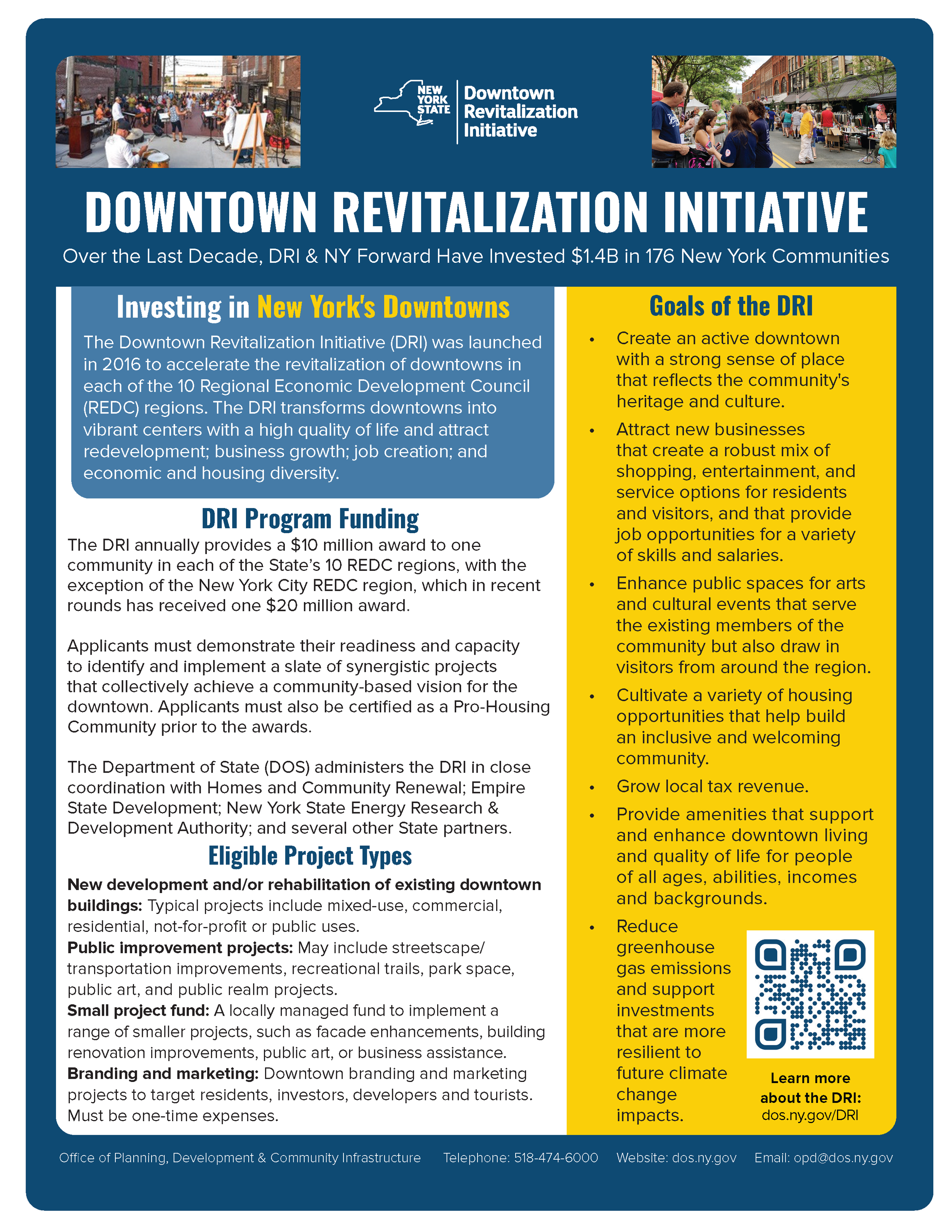
As the recipient of $10 million for the ninth round of the DRI for the capital region, this award kicks off a planning process to identify which projects will receive funding in order to revitalize the downtown area of the City of Rensselaer. The purpose of this initiative is to offer high quality of life to the residents of the area while producing economic growth, business, and housing diversity.
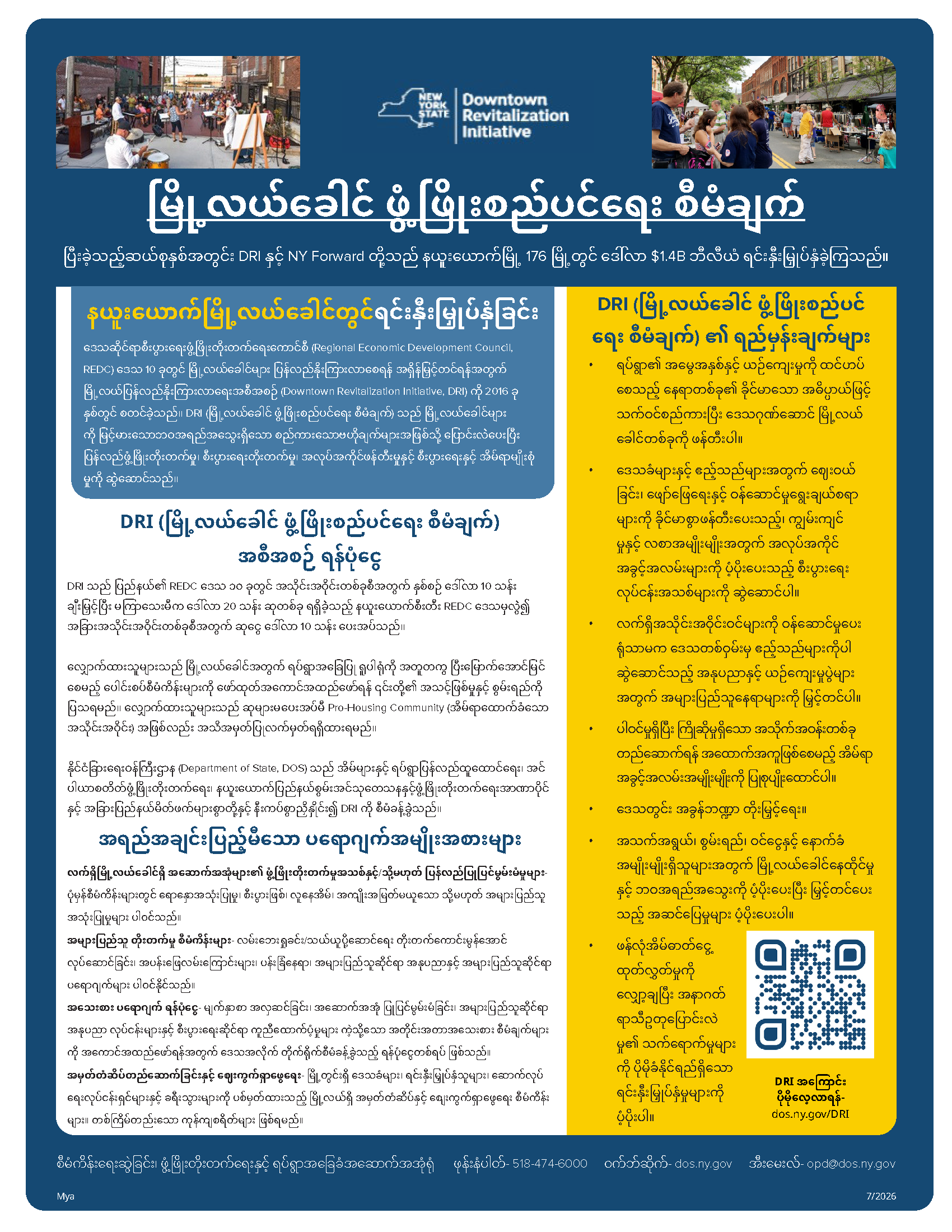
The Downtown Revitalization Initiative launched in 2016 to accelerate and expand the revitalization of downtowns and neighborhoods in all ten regions of the state to serve as centers of activity and catalysts for investment. Led by the New York State Department of State (DOS), the initiative represents an unprecedented and innovative plan-to-act strategy that couples strategic planning with immediate implementation, bringing with it an interagency team of state experts to support local government capacity in realizing their community's vision.
DRI Planning Process
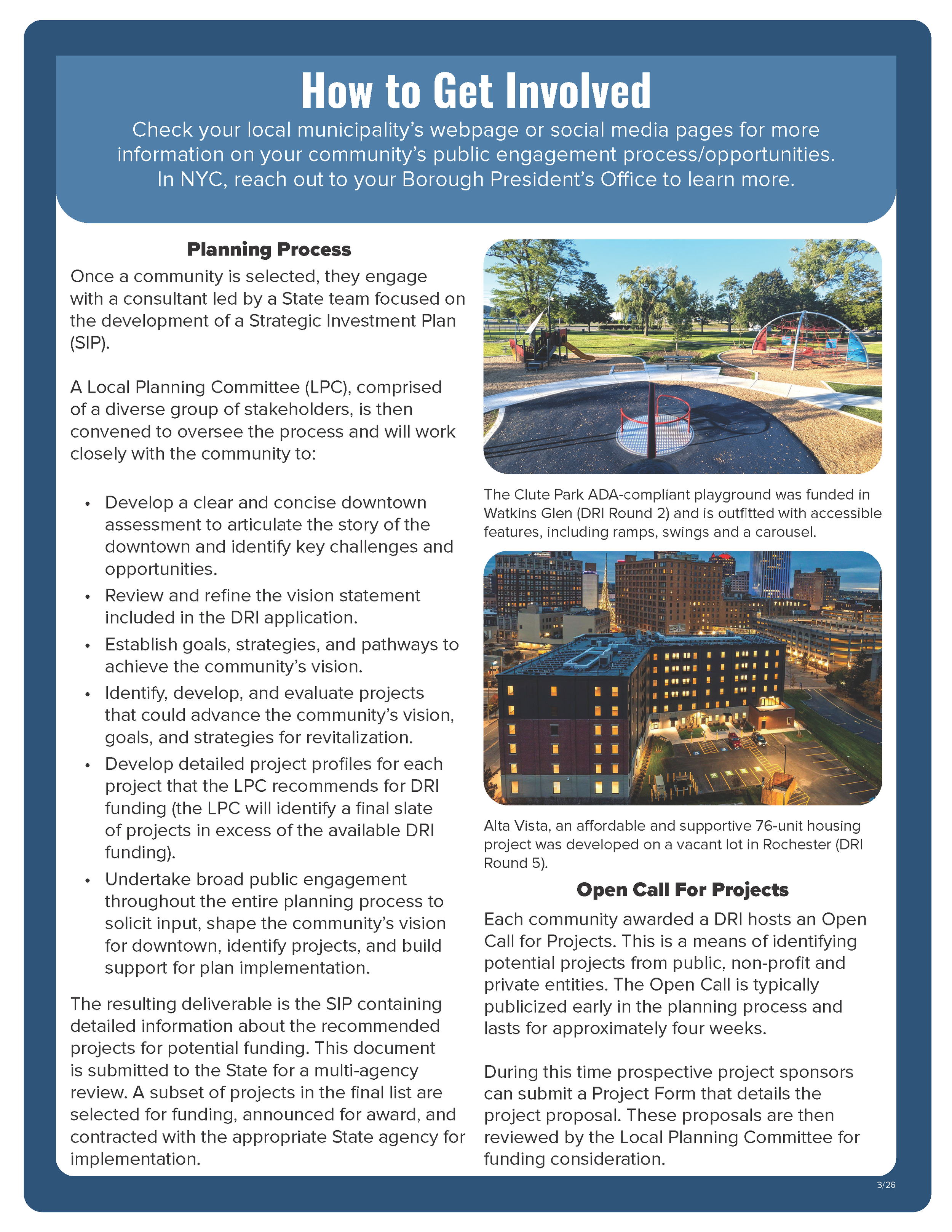
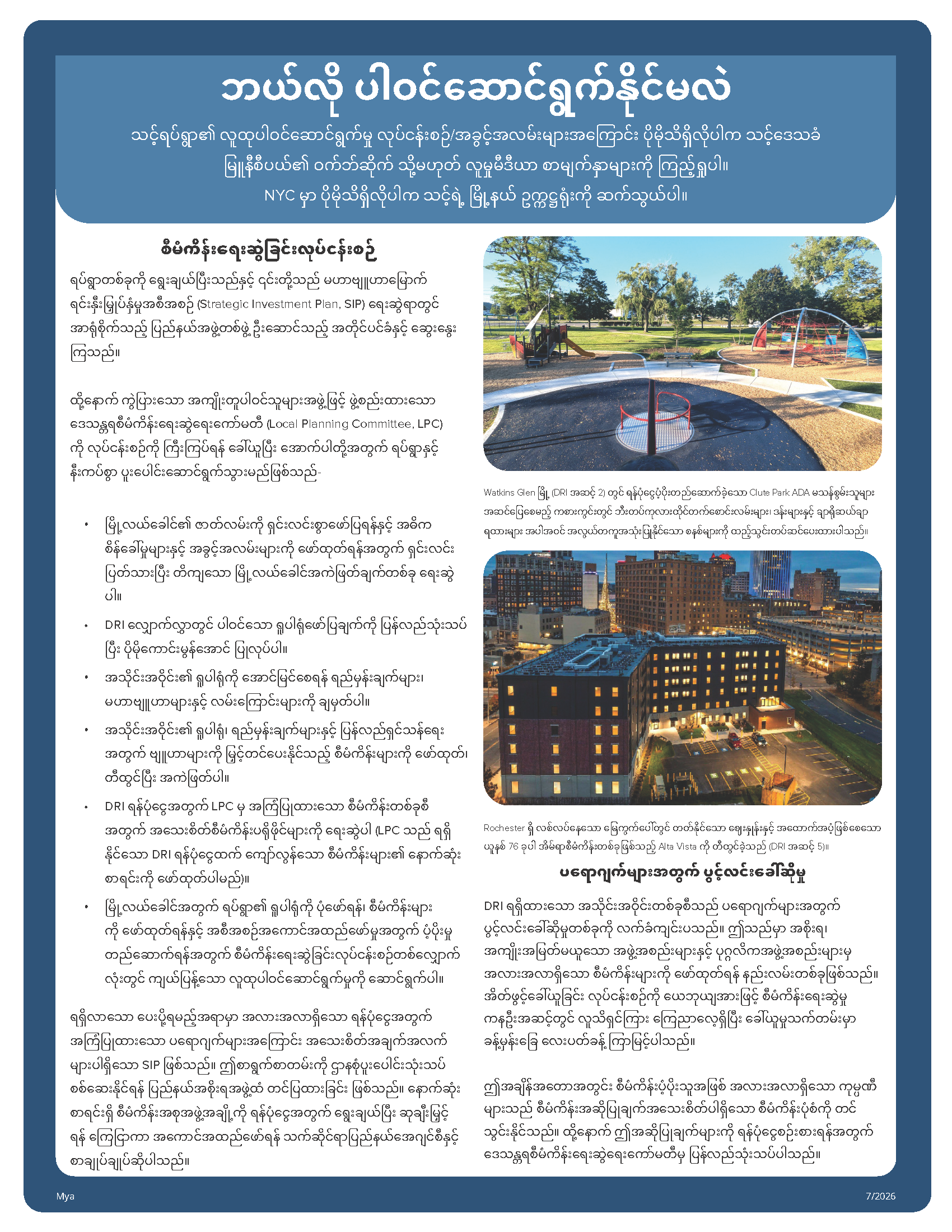
1. Local Planning Committee Formation
Coordinated by NYSDOS, State agencies (DOS, New York State Homes and Community Renewal (HCR), Empire State Development (ESD), and others) work with local officials and Regional Council members to identify stakeholders and community representatives to serve on the Local Planning Committee (LPC). The Secretary of State issues invitations to participate as LPC members.
2. Community Engagement
Inclusive community engagement is vital to successful DRI planning and implementation. The public will be kept informed of progress and invited to proactively contribute ideas throughout the development of the DRI. Notices of public meetings, events, and opportunities to provide feedback will be posted on this website and publicized through print, media, and online channels. Please check back regularly for updates.
Guiding framework for the DRI Strategic Investment Plan is developed by the LPC with public feedback. Goals identify conceptual ideas that the DRI Strategic Investment Plan should address.
3. Goals, Vision, and Strategies
DRI Strategic Investment Plan is written by consultants, is informed by public and LPC input, and is submitted to the State. Projects included in the Strategic Investment Plan will be evaluated by State agencies for alignment with State and local goals, project readiness, catalytic effect, secondary benefits, and cost effectiveness.
5. DRI Final Plan
Key projects are identified to advance the vision/goals and leverage additional investment. Priority Projects are organized by Goal to ensure that the DRI Plan addresses core objectives. Projects are identified & vetted by the local committee & public.
4. Priority Projects
Projects from each community will be evaluated by the State & selected for funding. The Governor will make an announcement on funded projects. State staff will work with project sponsors to execute project agreements and manage DRI contracts.
6. Implementation

Local Planning Committee
The Downtown Revitalization Initiative (DRI) accomplishes its goals through a unique State-local partnership that includes the Local Planning Committee (LPC), State agency staff, and a consultant team. The LPC is responsible for representing the interests and priorities of the community, while the State agency staff ensures that the process and deliverables are consistent with the goals, priorities, and requirements of the initiative.
The LPC is made up of local and regional leaders, stakeholders and community representatives. Each LPC meeting is led by two Co-Chairs consisting of the local elected official (or his or her designee) and a member of the Regional Economic Development Council (REDC). The full list of members is listed below, including the other community representatives that have been invited to participate by the Secretary of State.
-
John Defrancesco - Mayor of Rensselaer Co-Chair
Megan Daly - Port of Albany & Rensselaer Co-Chair
Anne Burton - Rensselaer Library
Christopher Leahey - Boys & Girls Club of Southern Rensselaer County
Heather McDaniel - Center for Economic Growth (CEG)
Margaret Clark - Amtrak
Ethan Warren - Capital District Transportation Authority
Brian Williams - Capital Region Workforce Development Board
Michelle Dennis - CARES of NY, INC
Raymond Stevens - Planning Commission Chair / Resident
Virginia “Ginny” O’Brien - St. Paul’s Center
Advisory Non-LPC (non-voting)
Thomas Hulihan - Director of Planning and Development
Amy Lolik - Assistant Director of Planning and Development
Bill DiCicco - Building & Zoning Administrator
Bill Smart - City Engineer
Richard Mooney - Director of Operations
Join our project mailing list!
Stay up to date with the DRI planning process.